The Hub Journey
How the Hub works and what happened when it launched
The Hub Journey
Each person who comes to the Hub follows a path that leads them through the process of reaching out and connecting to resources. The stages below outline what that Hub interaction journey may look like, from the hardship that propelled them to search for resources all the way to staff following up with them after their interaction.
1 Economic insecurity
Mounting pressures or a sudden crisis put stability at risk.

2 Searching for help
Looking for help, often facing waitlists and dead ends.
3 Finding the Hub
A web search, flyer, or community member points the way.
4 Contacting the Hub
An individual visits, calls, or texts the Hub to start the conversation.
5 Staff share resources
Staff learn about their unique needs and share relevant and vetted resources.
6 Reaching out to resources
The individual reaches out to resources, often with a warm handoff or introduction.
7 Staff follow-up with client
Staff check back to see what worked and discuss next steps.
↓ Scroll to walk through each stage
Stage 1: Economic Insecurity
Community members reach out to the Hub when they are in the midst of economic hardship. Many are experiencing or on the cusp of housing instability or navigating other challenges that have been building for months, such as rising rent, food insecurity, or health concerns.
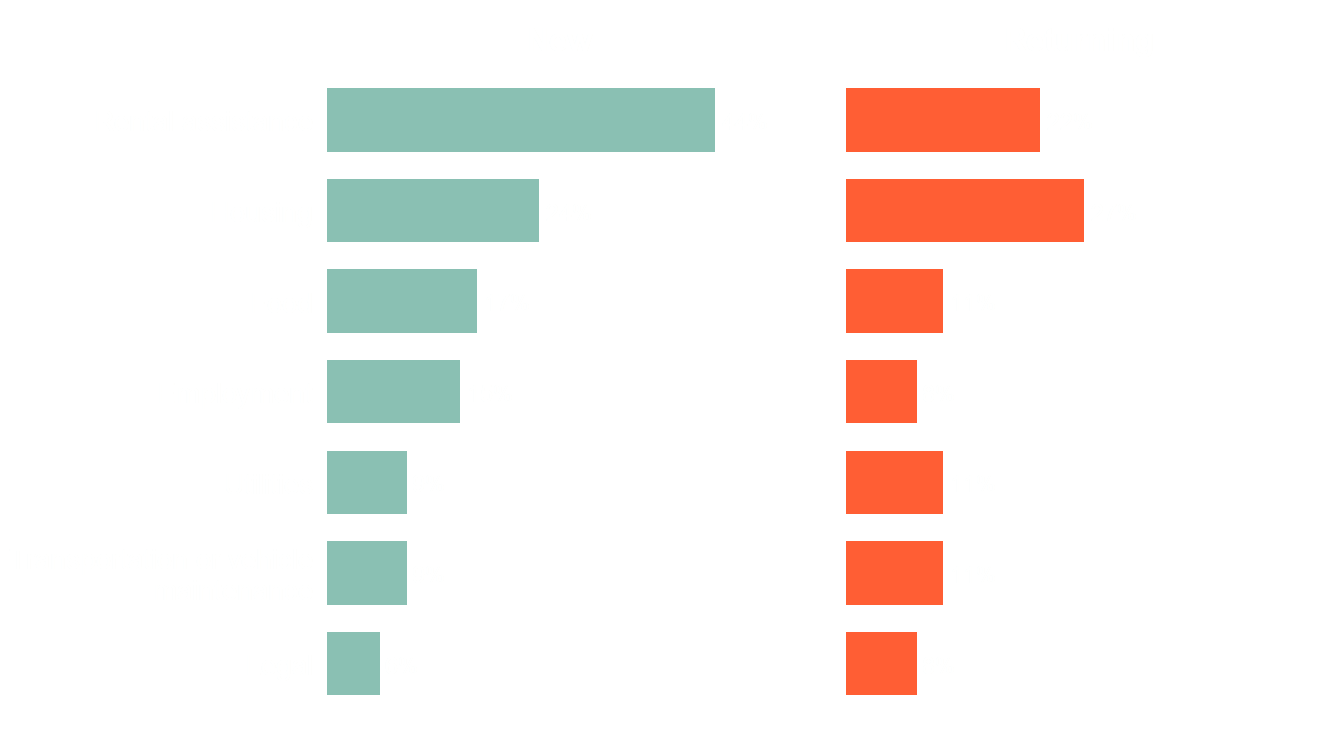
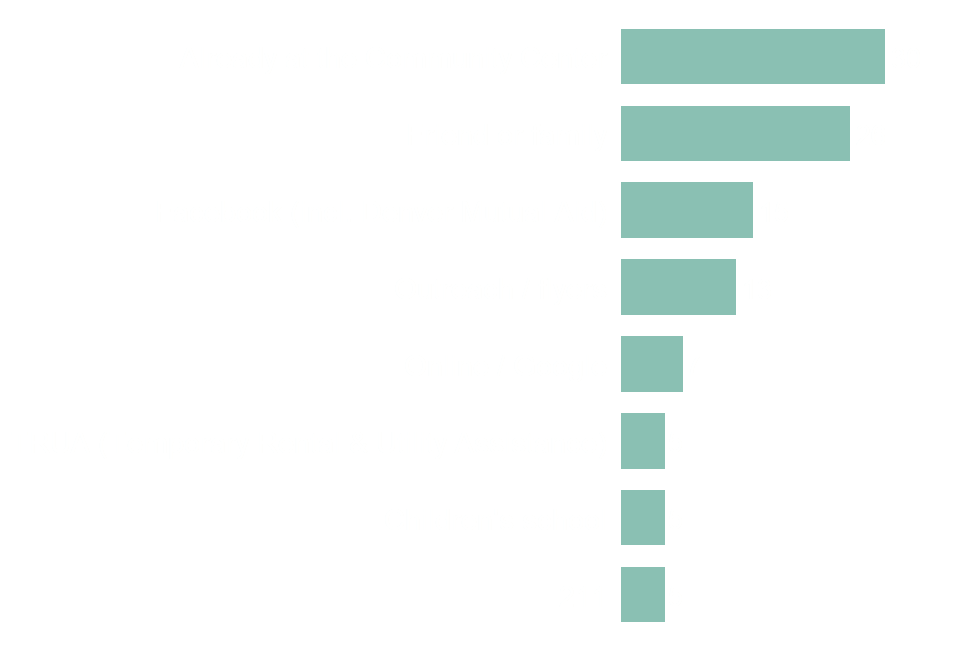
The most common needs people brought to the Hub were rental assistance, housing, and food, and many were navigating several intersecting challenges at once. The charts below show the share of new and returning clients by the need they expressed to staff (based on 186 new and 37 returning visits).
Housing/shelter was the most common single need: 24% of clients expressed it as a need at their initial visit. Those who reached out for reasons other than housing (76%) most often sought rental assistance, food, and employment.
People also arrived at different points along the spectrum of housing instability. About 14% of new clients were already experiencing homelessness, and others were facing eviction, as the chart below shows for new and returning clients.

Stage 2: Searching for Help
Before finding the Hub, many community members had already been searching for help, often encountering waitlists, eligibility barriers, or simply not knowing where to start.
“Instead of going to one trusted place, they’d have to contact multiple agencies on their own, repeat their story several times, and figure out complicated eligibility requirements — often leading to delays, or giving up altogether.”
— A community partner
Follow-up interviews with clients revealed that the majority had reached out to another organization for help before finding the Hub. However, clients also noted that organizations were often unresponsive or unable to help at that time.
“No one follows up with you… you get this list of resources that you can get online, you know, here’s this church or here’s this organization; but, do they have funding for utilities or can they help me with things like laundry or soap? Things like that?”
— Client, follow-up interview
Stage 3: Finding the Hub
People found the Hub in many ways. Many were coming to the Westwood Community Center for another program or service; others often came through a referral from a friend or family member, community outreach from the staff, partner organizations, and online searches.
The Hub was intentionally located within the Westwood Community Center, a familiar, accessible, and trusted space in the neighborhood. The design of the community center allows individuals to see staff, and vice versa, when they first walk up to the front desk to ask for resources. This setup allows staff to listen and engage with individuals they may be able to help. Additionally, staff have a private space in the community center to meet with Hub visitors, fostering a sense of comfort and confidentiality.
Stage 4: Contacting the Hub
Community members reached the Hub in multiple ways: in-person visits, phone calls, texts, and emails.

Text is an important feature of the Hub model. Returning clients leaned on it even more than first-time visitors: 44% of their contacts came by text, compared with 35% for new clients. Text lowers the barrier to reaching out, since a client does not need to set aside time for a call or a visit and can make contact on their own terms. In-person visits typically led to the most complete support, with richer conversation and faster relationship-building, but text opened the door for people who might not have reached out otherwise.
“It’s definitely a valuable resource. I loved the texting — that’s how I communicate. The text messages were a blessing; if not, I would have missed out.”
— Client, follow-up interview
One strength of the Hub is how staff use these conversations, whatever the format, to surface needs a client did not know to name. A simple prompt such as “What else can we help with?” often opens the door to something larger, and many clients found the Hub could help with needs they had assumed were out of scope.
“Resources for basic necessities is key to helping people, but we also look outside the box to allow relief and provide the ability to feel human again. We give them the ability to see that it’s ok to still celebrate moments in their family to reset, and to continue to seek help.”
— Hub Staff Member Mindy
“I just wanted to thank you guys for everything, especially the text messages to keep me up to speed and keep me on alert, at least put it in front of me: ‘Hey, call this person, call that person, do this, do that. We’re here for you. Don’t give up.’ It’s priceless.”
— Client, follow-up interview
Stage 5: Staff Share Resources
The core of the Hub interaction: a staff member sits with the client, listens to their full story, and works with them to identify the most relevant resources.
The interaction is more than a referral checklist. Hub staff use a holistic approach, asking not only what someone needs right now but also what else is going on and what they have already tried.
A defining feature of the Hub is its feedback and learning loop. When individuals came in with needs that the resource database did not yet cover, staff researched new options, drew on their own networks, and added what they found, continually improving the database in response to needs expressed by the community. In this way, each visit also helped document where community gaps exist and what the most common needs are. Over the course of the pilot, staff connected people to 175 different resources and built relationships with 8 partner organizations. In only 9 cases was the Hub unable to find a resource to offer, which is a reflection of the breadth of the resource database and the staff’s persistence in finding help in whatever way they can.
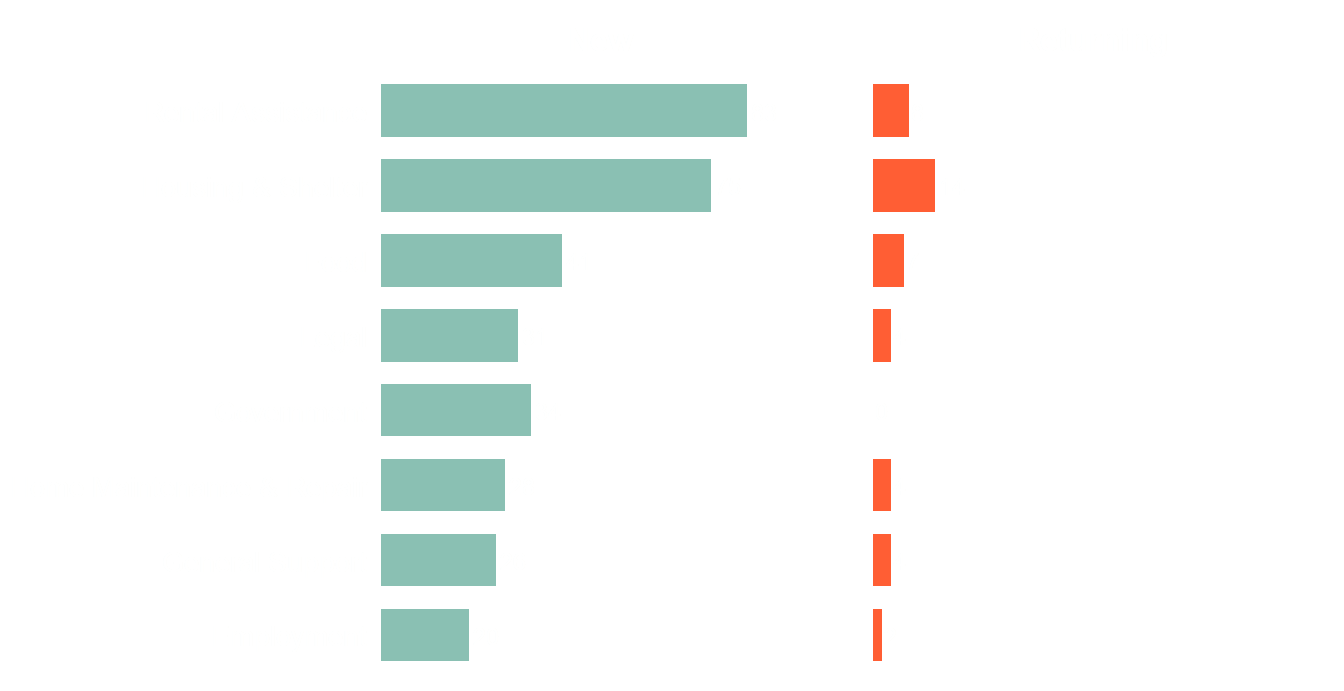
The resources people were connected to span a wide range of needs: housing and rental assistance most of all, along with food, medical care, employment, and general support. The chart below counts the number of people connected to each category — each person is counted once per category, even if they were referred to several organizations within it.
Behind those categories are specific organizations and programs. The resources people were connected to most often were rental-assistance funds, housing agencies, food, and government services or benefits programs:
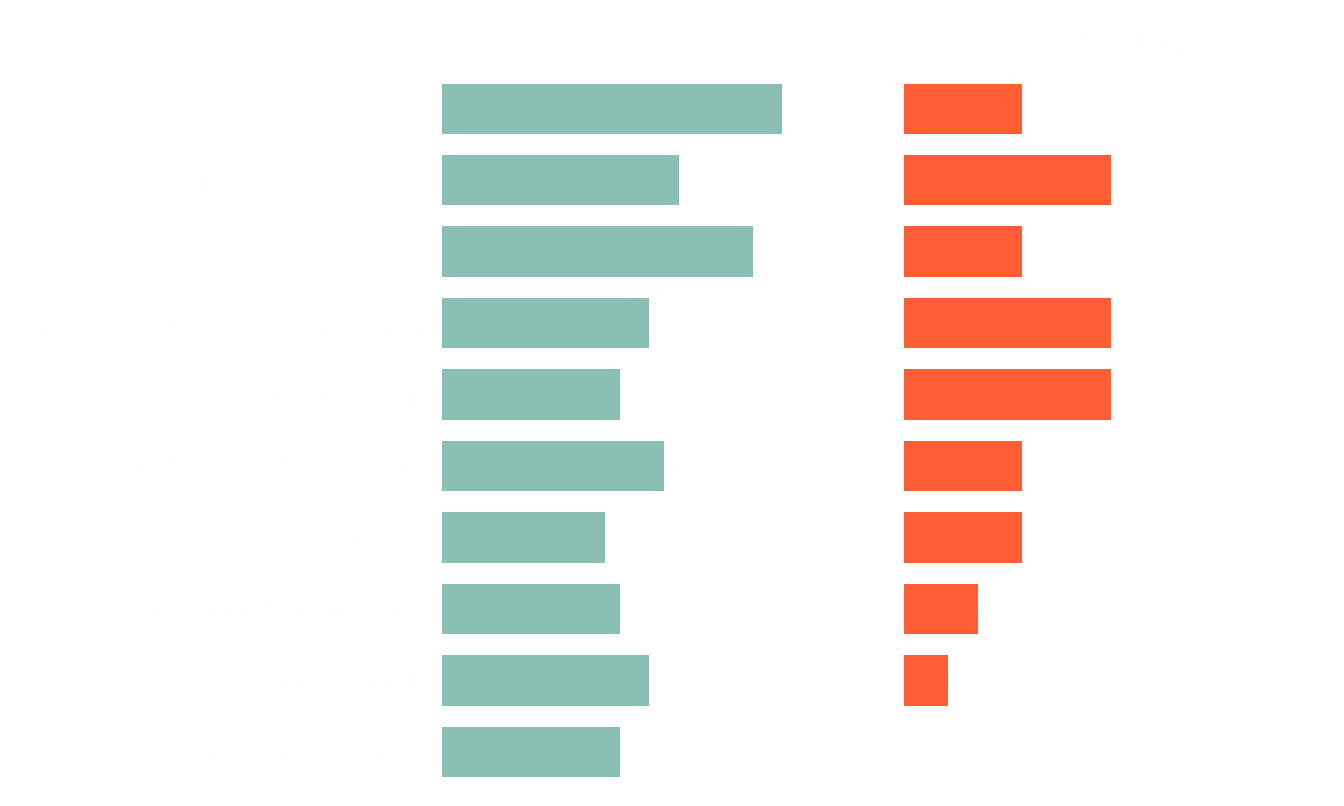
Staff provided a median of 2 resource connections per visit, for both new and returning clients.
“Housing and rental assistance are our most requested resources, but we also connect the community with resources that support other essential needs when navigating financial hardship.”
— Hub Staff Member Noemi
At the end of the visit, clients are invited to complete a brief satisfaction survey, which includes a few questions about whether they felt supported, received helpful information, and knew what to do next.
“You get this list of resources online… you don’t know which is which. [The Hub staff] connected the dots for me — and that’s huge, because when you’re in crisis… you just can’t function.”
— Client, follow-up interview
“Your reaching out to me made me feel like I could ask. Made me feel comfortable [asking for resources].”
— Client, follow-up interview
Stage 6: Reaching Out to Resources
With a curated list and often a warm introduction from Hub staff, the community member reaches out to services. Staff sometimes assist directly, helping fill out applications, making a call together, or walking someone through what to expect. The introduction is warm and specific to the client’s needs, rather than a generic referral, which encourages clients to reach out. In the case that an individual doesn’t receive a response or the resource doesn’t pan out, Hub staff recommend that the individual reaches back out to them so they can try another path.
“[A warm handoff is] taking the time to listen, understand each person’s needs, connect them with the right resources and follow up to offer continued support through the process.”
— Hub Staff Member Noemi
“Having partners with compassion that mirrors ours is important in building relationships to connect to resources that actually work. We build trust across systems to allow a better understanding of the unique needs of our clients.”
— Hub Staff Member Mindy
Stage 7: Staff Follow-Up with Client
After a couple of weeks, Hub staff check in either through text, phone call, or email to learn if the need was met or if the person requires additional support.
Following up reassures the client that the relationship with the Hub extends beyond just the first interaction. It also helps staff identify and provide further support in cases where an initial resource connection did not work out. Staff also make sure to reach back out when they learn of a new resource that might help someone they have already worked with, regardless of the success of previous resource connections. Additionally, following up increases a person’s level of familiarity and comfort with the staff, which encourages clients to surface more secondary needs that may have gone unmentioned during their first interaction. Many clients returned to the Hub more than once as their circumstances changed: of 223 total interactions, 37 were follow-up visits with returning clients.
Follow-up is possible, and meaningful, because of who the Hub staff are. There are currently two regular staff members at the Hub, both of whom are from the Westwood community and have experience working with the systems and organizations they refer individuals to. One staff member also speaks Spanish which allows the Hub to have a much greater reach; about 79% of clients with recorded demographics were Hispanic, and 31% of client feedback forms were completed in Spanish, a sign of how critical bilingual staffing is to this work.
“It was really nice that you guys reached out a couple times, and it sucks that nobody else got back to me.”
— Client, follow-up interview
“[Hub staff were] very helpful and I feel very supported.”
— Client, client feedback survey
The Hub Journey
1 Economic insecurity
2 Searching for help
3 Finding the Hub
4 Contacting the Hub
5 Staff share resources
6 Reaching out to resources
7 Staff follow-up with client
Continue reading: Key Findings →